
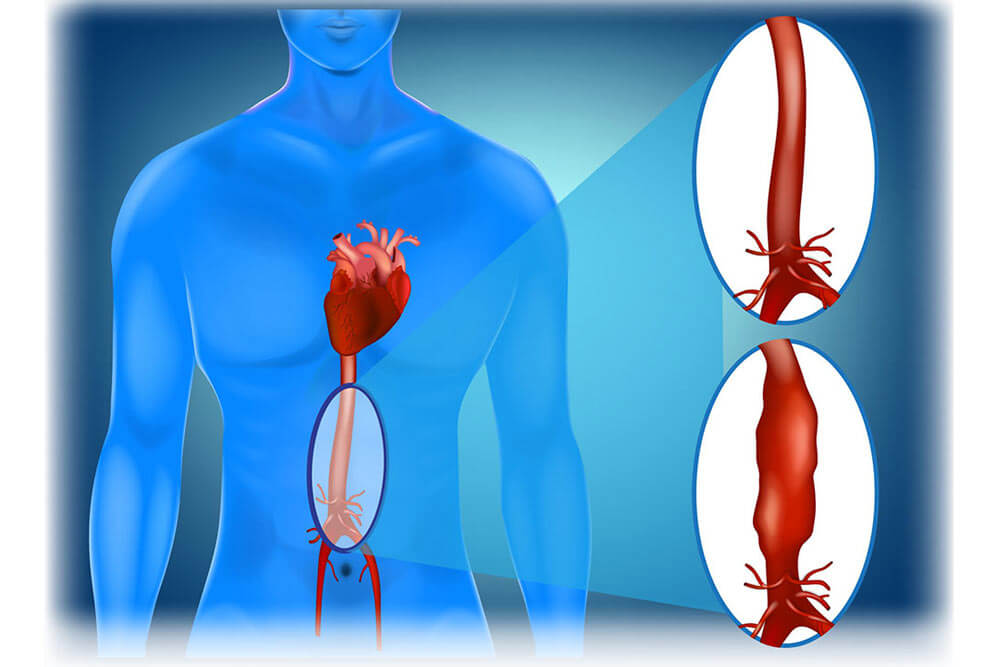
An abdominal aortic aneurysm occurs when a portion of the abdominal aorta becomes enlarged and weakened, often due to a buildup of plaque, high blood pressure, or genetic factors. Over time, the artery wall stretches like a balloon, and if it continues to grow, the risk of rupture increases.
AAAs are most common in adults over age 60, especially men and smokers, but can occur in women as well.
In many cases, an AAA has no symptoms until it grows large or ruptures. When symptoms do occur, they may include:
Ruptured AAAs cause life-threatening internal bleeding. If you experience sudden, severe abdominal or back pain, call 911 immediately.
Several factors increase the risk of developing an AAA:
Small aneurysms (typically <5.5 cm in men, <5.0 cm in women) may not need immediate surgery but require:
Most people have never heard of an abdominal aortic aneurysm (AAA) until they or a loved one is diagnosed. Often called a “silent threat,” an AAA is a weakening and bulging of the aorta, the main blood vessel that carries blood from your heart to the rest of your body. If it ruptures, it can be life-threatening.
At Premier Vascular, our board-certified vascular surgeons specialize in diagnosing, monitoring, and treating AAAs. Serving patients across Macon and Central Georgia, we provide advanced vascular care to protect your health and prevent dangerous complications.
Most AAAs are discovered incidentally during imaging for another condition or through screening in at-risk patients.
Diagnostic tools include:
At Premier Vascular, we offer in-office ultrasound screening for high-risk patients, such as men over 65 who have ever smoked.
Untreated AAAs can lead to:
Treatment dramatically reduces the risk of rupture and provides long-term protection.
Yes. While it may not cause symptoms, rupture can be fatal if untreated.
Growth rates vary, but small aneurysms are usually monitored every 6–12 months to track changes.
Yes. Quitting smoking, controlling blood pressure, and managing cholesterol all help slow aneurysm growth.
EVAR is less invasive with quicker recovery, but not every patient is a candidate. Open repair is sometimes required for complex or large aneurysms.
Yes. Medicare covers a one-time screening ultrasound for men aged 65–75 who have ever smoked. Most insurance plans follow similar guidelines.
Schedule a consultation and screening. Early detection is the best protection against rupture.
An abdominal aortic aneurysm can be silent — until it isn’t. With expert screening, diagnosis, and treatment, you can prevent life-threatening complications. At Premier Vascular, we’re committed to keeping you safe and giving you peace of mind.
Call 478-250-9785 today to schedule your AAA evaluation.
Serving patients across Macon and Central Georgia.