
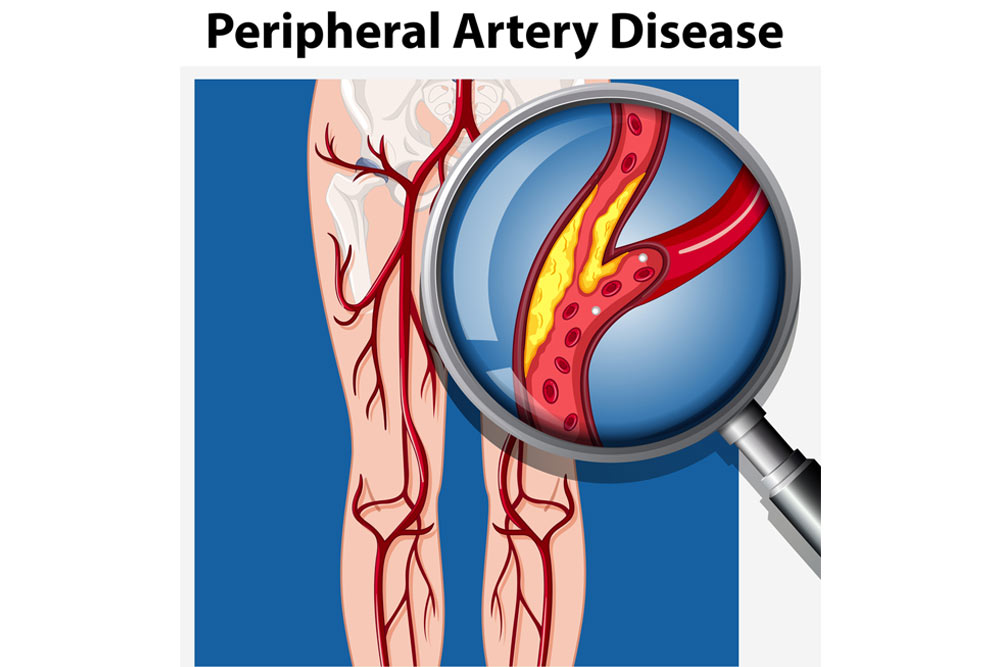
Peripheral Artery Disease, referred to as PAD, occurs when arteries in the legs become narrowed or blocked due to a buildup of fatty deposits, or plaque. This restricts blood flow to the muscles and tissues in your legs, leading to pain, fatigue, and — in more severe cases — tissue damage and limb loss.
PAD is a form of atherosclerosis (hardening of the arteries) and can signal that similar blockages are happening elsewhere in the body — including the heart and brain. That means diagnosing PAD isn’t just about saving your legs, but protecting your life.
PAD can be sneaky, symptoms can range from subtle to severe — and some people have no symptoms at all until the disease is advanced. Common signs include:
If PAD is left untreated, it can lead to critical limb ischemia, a serious condition that may require surgery or even amputation.
The most common cause of PAD is atherosclerosis, where fatty deposits build up in the artery walls. This narrows the arteries and reduces blood flow. Risk factors include:
PAD is common, especially in older adults — but it often goes undiagnosed until symptoms become severe.
The goal of treatment is to restore blood flow, reduce symptoms, and prevent complications —
including heart attack, stroke, and limb loss.
While helpful for symptom relief, conservative care won’t correct underlying valve damage.
Performed in-office with little or no downtime:
Our board-certified vascular surgeons offer every level of care — and we’ll only recommend surgery if it’s truly the only or best option for your long-term health.
Leg pain when walking. Cramping calves. Cold feet. Wounds that won’t heal.
These aren’t just inconveniences — they can be signs of Peripheral Artery Disease (PAD), a serious circulation problem that affects millions of Americans.
At Premier Vascular, we specialize in diagnosing and treating PAD — helping patients throughout Macon and Central Georgia improve circulation, relieve symptoms, and prevent dangerous complications. Whether you’re just starting to notice changes or you’ve been struggling with leg pain for years, we’re here to help.
Doctors classify PAD into four main stages:
Stage 1: Asymptomatic
Plaque is present, but no symptoms yet. Often found through screening.
Stage 2: Claudication
Leg pain or cramping with walking that goes away with rest.
Stage 3: Rest Pain
Pain in feet or toes even at rest, especially at night. Indicates more severe blood flow restriction.
Stage 4: Critical Limb Ischemia (CLI)
Non-healing wounds, ulcers, or gangrene. High risk of limb loss without urgent treatment.
Our evaluations are quick, painless, and done right in our outpatient clinic. A combination of physical exams, history review, and non-invasive testing are done to diagnose PAD. Common tools include:
Diagnosis is quick, painless, and can be done right in our outpatient clinic.
Not usually. Most patients start with lifestyle changes or minimally invasive procedures. Surgery is only recommended if truly necessary.
Yes — PAD is a sign of reduced blood flow and can lead to limb loss, heart attack, or stroke if left untreated. The earlier it’s diagnosed, the easier it is to manage.
PAD is a condition where the arteries that carry blood to your legs and feet become narrowed or blocked due to plaque buildup (atherosclerosis). This reduces blood flow, which can lead to leg pain, wounds that don’t heal, and in severe cases, tissue loss or amputation.
PAD is a chronic condition that cannot be cured, but it can be managed successfully. With the right care, symptoms can improve and progression can be slowed or even reversed.
The most classic symptom is leg pain or cramping (claudication) during walking or exercise that improves with rest. Other symptoms may include leg numbness, weakness, cold feet, slow- healing wounds on the legs or feet, shiny skin, or hair loss on the legs.
Not necessarily. Most patients are treated with lifestyle changes or minimally invasive procedures. Surgery is only recommended when truly needed — and our team has the expertise to handle every situation.
The main cause of PAD is atherosclerosis—a hardening and narrowing of the arteries from fatty deposits (plaque). Risk factors include smoking, diabetes, high blood pressure, high cholesterol, obesity, and aging.
Minimally invasive procedures like angioplasty and stenting are generally well tolerated with little discomfort. Most patients go home the same day.
Anyone can develop PAD, but your risk is higher if you’re over 50, smoke, have diabetes, high blood pressure, high cholesterol, or a family history of vascular disease.
Untreated PAD can lead to worsening pain, non-healing sores, infections, and critical limb ischemia (severely reduced blood flow), which may result in amputation.
Schedule a consultation with our team. A simple, painless screening can tell us a lot — and early diagnosis can make all the difference.
Yes, PAD can impact one or both legs, though the severity may differ between them. Symptoms may feel worse on one side depending on where the blockages are.
Premier Vascular uses noninvasive tests like the ankle-brachial index (ABI), arterial ultrasounds, and advanced imaging to assess blood flow and detect blockages.
Call our office at 478-250-9785 to book your consultation. Our team is here to help protect your health and keep you moving.
Yes — Peripheral Artery Disease treatment and diagnosis and treatment are considered medically necessary and are covered by Medicare and most insurance plans. Our practice accepts most all insurances. We’ll help you navigate the process and verify your benefits.
Of course! Our patient coordinators are happy to help you understand your coverage. Just give us a call at 478-250-9785.
If you’re experiencing symptoms of PAD — or want to protect your circulation before problems progress — call Premier Vascular today at 478-250-9785.
We’ll help you:
Call 478-250-9785 today to schedule your consultation.
Serving patients across Macon and Central Georgia.