
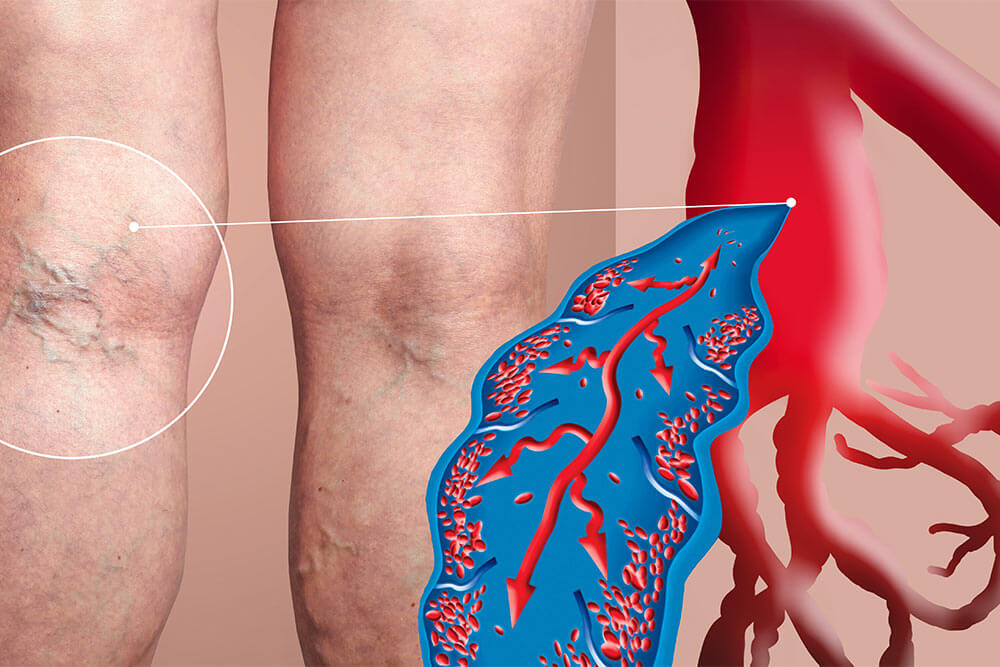
DVT occurs when a blood clot forms in a deep vein, most often in the legs. Unlike superficial clots, DVT can block blood flow and break loose, traveling to the lungs and causing a life- threatening pulmonary embolism.
This condition affects hundreds of thousands of Americans each year and is considered a major preventable cause of hospitalizations and deaths if left untreated.
This condition affects hundreds of thousands of Americans each year and is considered a major preventable cause of hospitalizations and deaths if left untreated.
Not everyone with DVT has obvious symptoms, but the most common include:
Important: DVT can sometimes present with minimal or no symptoms. That’s why awareness and early detection are critical.
DVT develops when blood flow slows, veins are injured, or clotting factors increase. This “Virchow’s Triad” can be triggered by:
Sudden swelling in one leg. Warmth, redness, or tenderness that seems unusual. A heavy ache that won’t go away. These may all be signs of a Deep Vein Thrombosis (DVT) — a serious medical condition that requires prompt evaluation.
At Premier Vascular, our board-certified vascular surgeons diagnose and treat DVT quickly to restore circulation, reduce pain, and prevent dangerous complications like pulmonary embolism (PE). Serving patients across Macon and Central Georgia, we’re here to provide expert care when every minute matters.
Without treatment, DVT can lead to:
If DVT is suspected, time is critical. At Premier Vascular, we use:
Our outpatient clinics are equipped to provide fast, accurate diagnosis so treatment can begin immediately.
Yes, if untreated. DVT can lead to pulmonary embolism, which is a medical emergency.
It often feels like a heavy ache, swelling, or cramping in one leg — especially in the calf. The skin may feel warm or look red.
No. Without treatment, the clot may worsen or break loose. Prompt medical care is essential.
Blood thinners are typically prescribed for 3–6 months, but some patients with ongoing risk factors may need longer treatment.
Most treatments involve medications and non-invasive procedures. Invasive treatments are well tolerated and reserved for severe cases.
Yes. Staying active, avoiding long periods of immobility, wearing compression stockings, and managing risk factors like smoking or obesity all help lower your risk.
If you notice sudden leg swelling, pain, or redness, don’t wait — call Premier Vascular immediately at 478-250-9785.
Our team provides fast, effective care to protect your circulation, prevent dangerous complications, and help you return to health.
Call 478-250-9785 today to schedule your consultation.
Serving patients across Macon and Central Georgia.